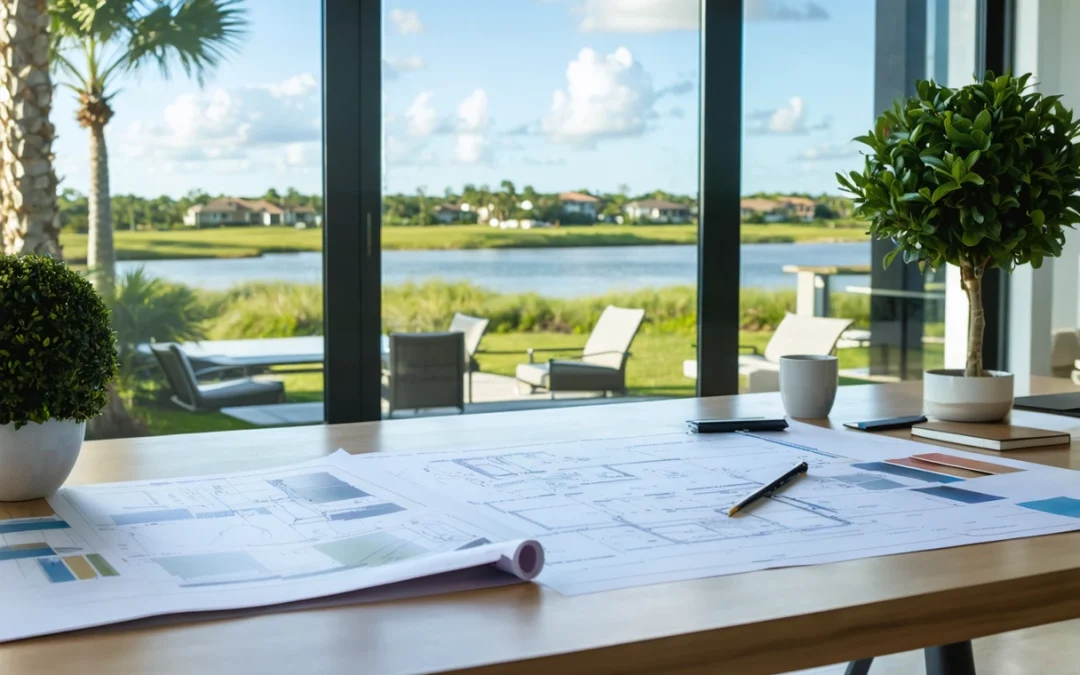
Coastal living in Southwest Florida comes with year-round sunshine, warm breezes, salt air, and a lifestyle that naturally extends outdoors. For homeowners in Englewood and North Port, a well-designed lanai enclosure can make a patio, pool deck, or rear outdoor living area more comfortable, usable, and protected throughout the year.
Choosing the right lanai enclosure is not just about appearance. Coastal conditions, local wind exposure, insects, humidity, privacy needs, and long-term maintenance all play a role. The best enclosure for your home should complement your architecture while standing up to the unique environmental demands of the Gulf Coast region.
Why Coastal Conditions Matter When Planning a Lanai Enclosure
Homes in Englewood and North Port experience a combination of weather and environmental factors that can affect the performance of a lanai enclosure over time. Salt air, high humidity, intense UV exposure, heavy summer rains, and seasonal tropical storms can all impact screens, fasteners, framing materials, doors, and hardware. This makes material selection especially important for coastal homes.
In areas closer to Lemon Bay, Manasota Key, the Myakka River, or other water-influenced environments, corrosion resistance should be a top priority. Aluminum framing is commonly used for lanai and patio enclosures in Florida because it is lightweight, durable, and resistant to rust. However, the quality of the coating, fasteners, anchors, and installation methods can make a major difference in how well the enclosure performs over the years.
Wind, Rain, and Storm Exposure
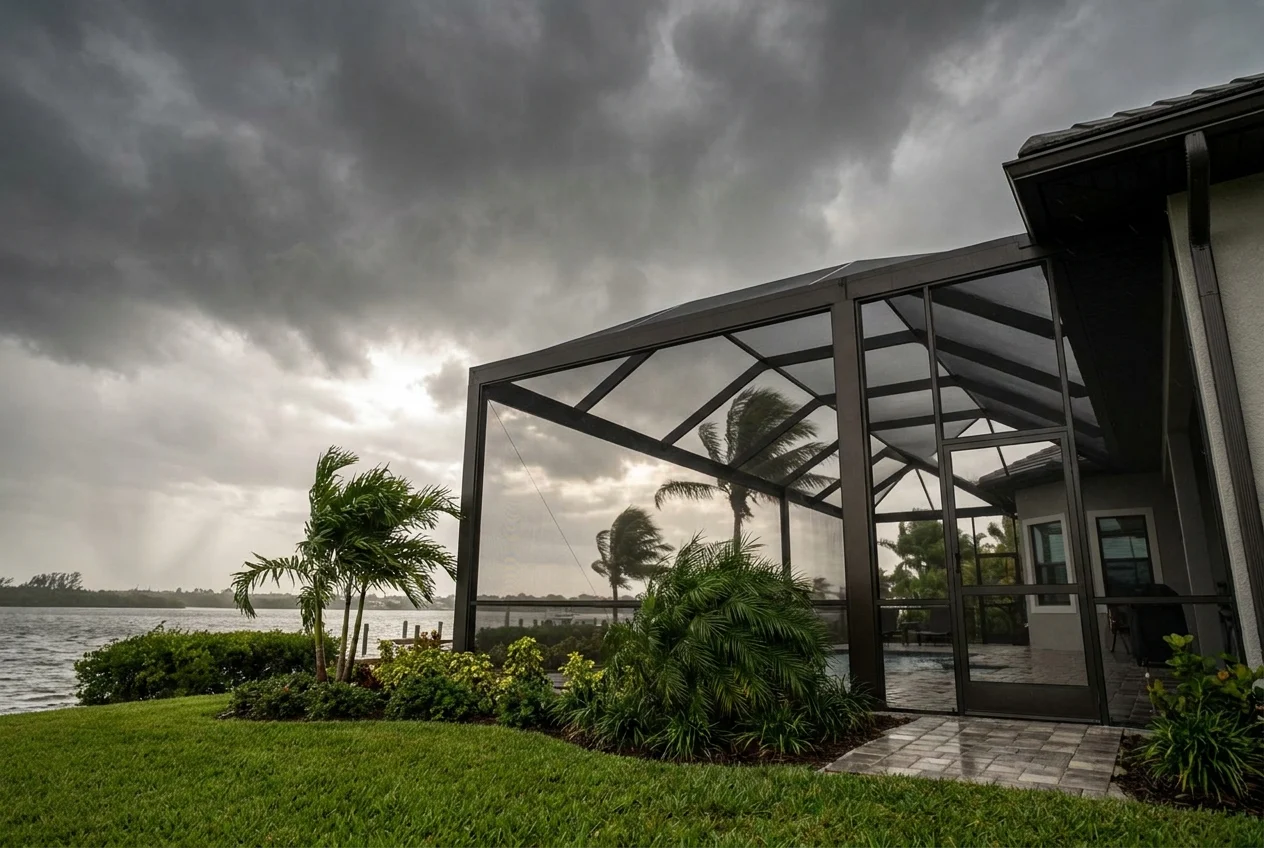
Coastal homes often face stronger wind loads than inland properties, especially during summer storms and hurricane season. A lanai enclosure should be designed with local code requirements and site-specific exposure in mind. The size of the enclosure, roof connection, screen wall height, and anchoring system can all influence structural performance.
Rain management is another key consideration. A poorly planned enclosure can allow water to pool, splash into seating areas, or create drainage issues around the patio or pool deck. Proper slope, gutter integration, screen tension, and threshold placement help improve comfort while reducing long-term moisture problems.
Sun, Heat, and UV Protection
Englewood and North Port homeowners often want a lanai enclosure that provides shade and comfort without blocking the open-air feeling that makes outdoor living so appealing. Screen selection plays an important role in controlling glare, heat, and UV exposure. Some screens are designed for maximum visibility, while others offer better solar protection or increased privacy.
For patios that receive intense afternoon sun, a solar screen or privacy screen may help reduce heat buildup and improve usability during peak daylight hours. For pool enclosures or larger lanais where views are a priority, a more open screen mesh may be preferred. The right choice depends on how the space is used, the direction it faces, and the homeowner’s comfort goals.
Comparing Popular Lanai Enclosure Options for Englewood and North Port Homes
Lanai enclosures can be customized in several ways, from simple screened patio systems to more substantial structures with insulated roof panels, panoramic screen openings, or privacy features. Understanding the most common options can help homeowners narrow down the right solution for their property and lifestyle.
The ideal enclosure will depend on whether the lanai is being used for casual seating, outdoor dining, pool protection, pet-friendly space, entertaining, or all-weather enjoyment. Budget, existing patio layout, roofline, neighborhood requirements, and maintenance expectations should also be considered before selecting a design.
Screened Lanai Enclosures
A traditional screened lanai enclosure is one of the most popular choices for Florida homeowners. It allows fresh air and natural light into the space while helping keep out mosquitoes, no-see-ums, leaves, and debris. This is especially valuable in coastal and water-adjacent communities where insects can quickly make an uncovered patio uncomfortable.
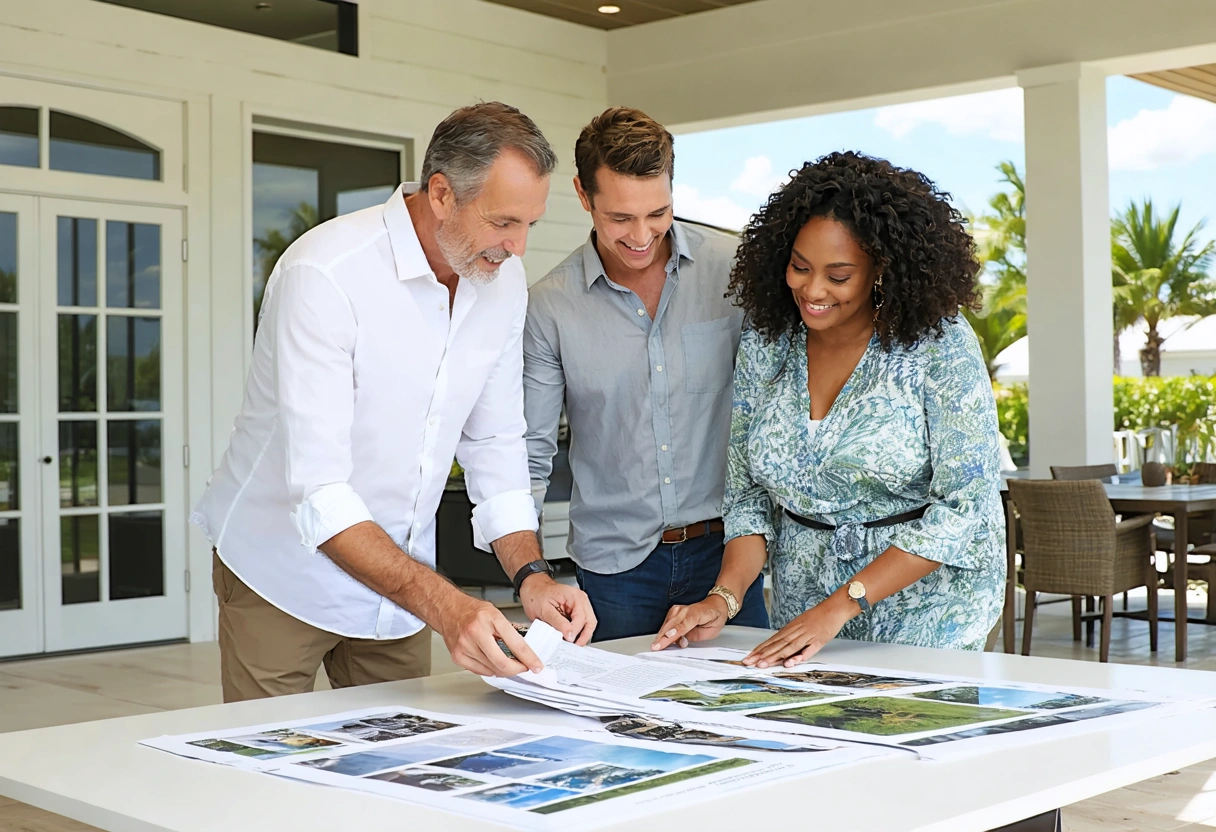
Screened enclosures can be designed with standard mesh, no-see-um screen, pet-resistant screen, privacy screen, or solar screen depending on the home’s location and the homeowner’s priorities. In Englewood and North Port, no-see-um screen is often worth considering for properties near mangroves, canals, wooded areas, or standing water.
Pool Cage and Patio Screen Enclosures
For homes with pools, a full pool cage enclosure can create a cleaner and more enjoyable outdoor environment. It helps reduce leaves, palm fronds, insects, and debris from entering the pool while also making the surrounding deck more comfortable for lounging and entertaining. Pool cages are especially practical in Southwest Florida, where outdoor spaces are used frequently throughout the year.
Modern pool enclosures can include larger screen openings, picture window panels, upgraded fasteners, and stronger framing profiles for a more open view. These features are particularly appealing for homeowners with preserve views, waterfront lots, or landscaped backyards who want protection without making the outdoor space feel closed in.
Lanai Enclosures With Solid or Insulated Roof Panels
Some homeowners prefer a lanai enclosure with a solid roof or insulated roof panels instead of a screen roof. This option can provide more shade, better rain protection, and improved comfort during hot afternoons. It can also make the space feel more like an outdoor
living room, especially when paired with ceiling fans, comfortable furniture, and weather-resistant lighting.
Insulated roof panels are useful when the lanai receives direct sun for much of the day. They help reduce radiant heat and can make the covered space more comfortable than a standard aluminum roof panel. For homeowners who want to dine outdoors during summer rain showers or keep furniture better protected from constant sun exposure, this type of enclosure can be a practical long-term upgrade.
Glass, Vinyl, and Acrylic Window Enclosures
Some lanais can be enclosed with sliding vinyl panels, acrylic windows, or glass systems to create a more protected three-season room. These systems offer more control over wind-driven rain, pollen, dust, and temperature changes compared with screen alone. They can be especially helpful for homeowners who want to use the space during cooler mornings, breezy evenings, or stormy summer afternoons.
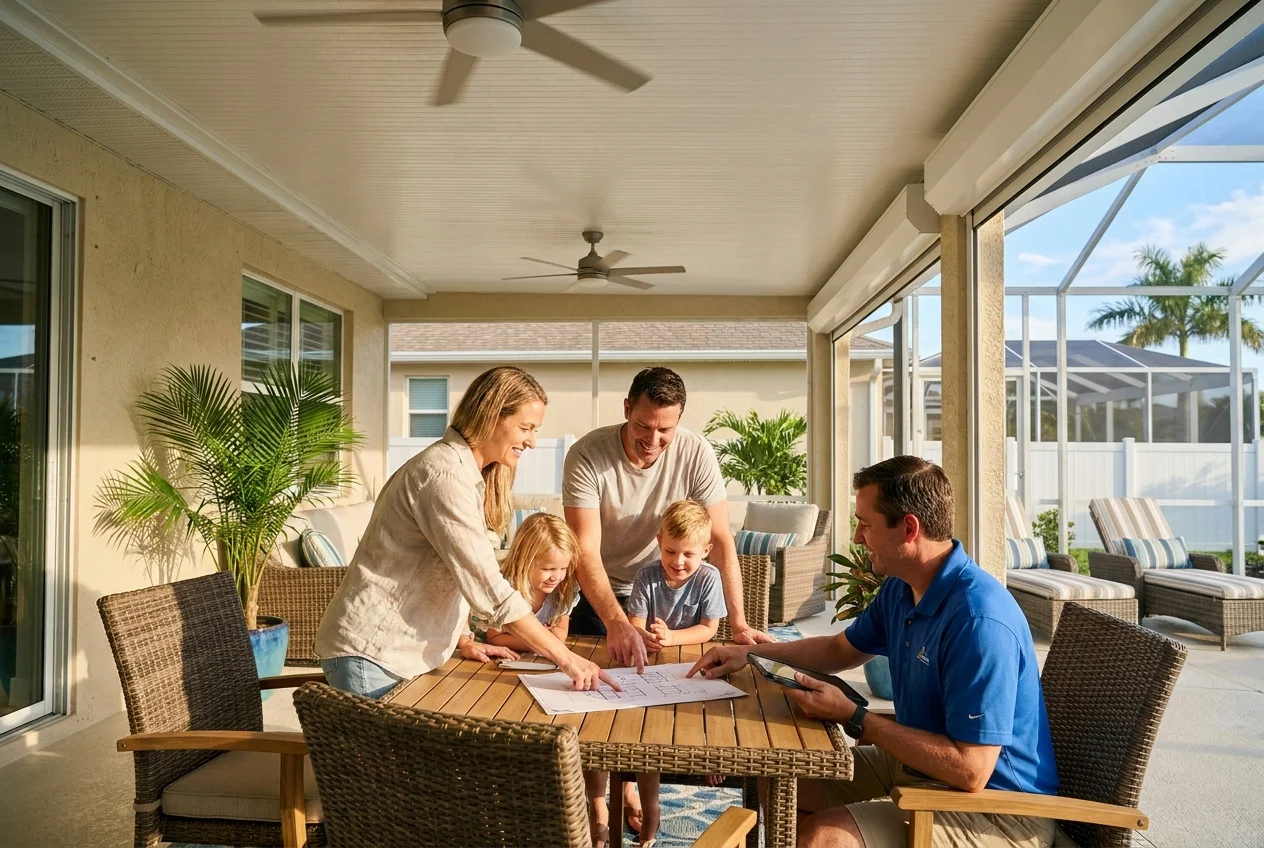
It is important to understand the difference between a screened lanai and a more enclosed room. Adding windows or solid panels may affect permitting, ventilation, energy considerations, and how the space is classified. In coastal Florida, the system should still be selected with humidity, wind resistance, drainage, and corrosion protection in mind.
Choosing the Right Screen Material for Comfort and Performance
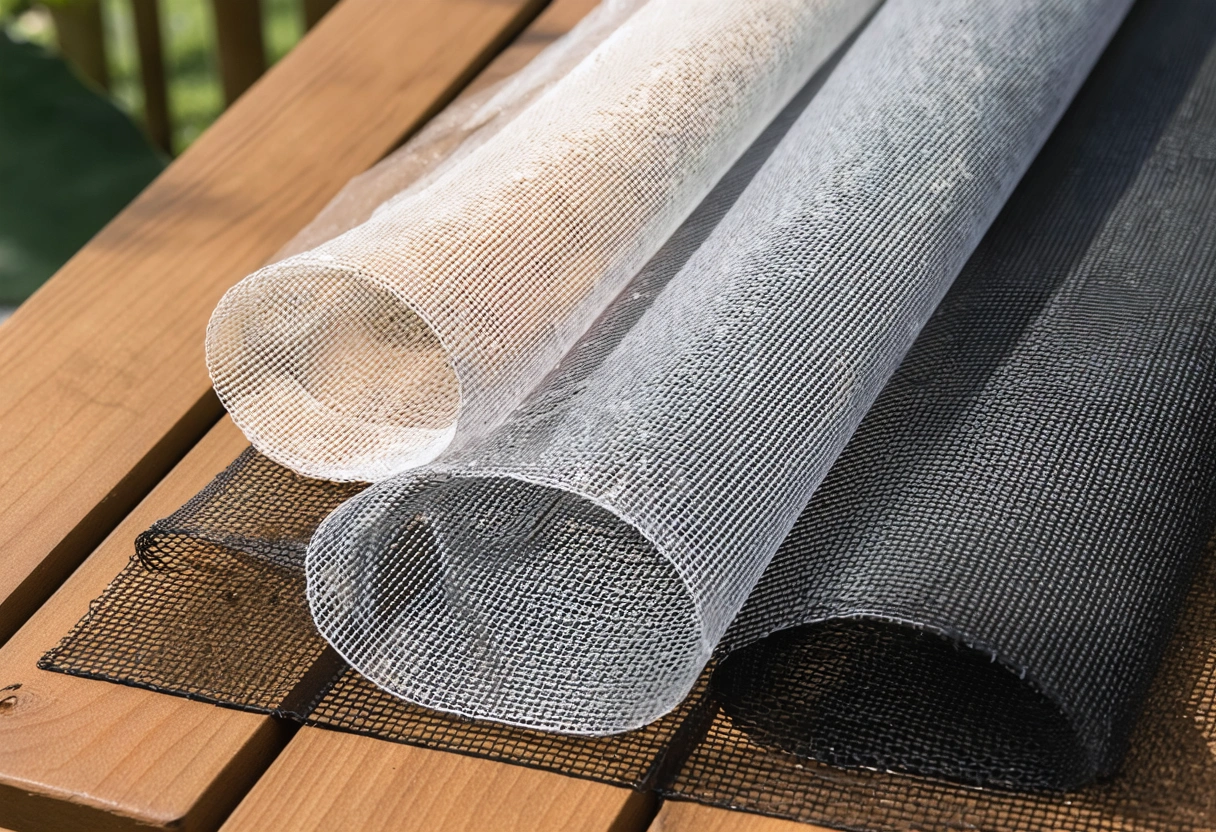
The screen may seem like a small detail, but it has a major effect on how a lanai feels and functions. Standard fiberglass screen is common and affordable, but it may not be the best option for every coastal home. Properties near water, marshy areas, preserves, or dense landscaping may benefit from a tighter mesh designed to block smaller insects.
No-see-um screen is a popular choice in parts of Englewood and North Port because it helps reduce the tiny biting insects that can pass through standard screen. The tradeoff is that tighter mesh can reduce airflow slightly and may make the enclosure feel a bit more shaded. For many homeowners, that tradeoff is worthwhile because it dramatically improves comfort during dawn, dusk, and humid evenings.
Solar and Privacy Screen
Solar screen is designed to reduce glare and heat gain, making it a strong option for west-facing lanais or patios that receive intense afternoon sun. It can protect furniture from fading and make the space more comfortable for reading, dining, or relaxing. Homeowners who find themselves avoiding the lanai during the hottest part of the day may notice a significant difference with the right solar screen.
Privacy screen can help shield the lanai from nearby neighbors, roads, or shared community spaces. This is especially useful in neighborhoods where homes are positioned close together. Some privacy screens are darker and more opaque, while others provide a moderate visual barrier while still allowing airflow and filtered light.
Pet-Resistant Screen
For households with dogs or cats, pet-resistant screen can prevent tears, punctures, and frequent repairs. It is made from stronger material than standard screen and is commonly used on lower wall sections, door panels, or areas where pets lean, scratch, or push. It is not completely indestructible, but it performs much better in active households.
A practical design may combine different screen types in one enclosure. For example, a homeowner might use no-see-um screen on most panels, pet screen along the lower sections, and solar screen on the side that receives the harshest sun.
Frame, Fastener, and Hardware Details That Affect Longevity
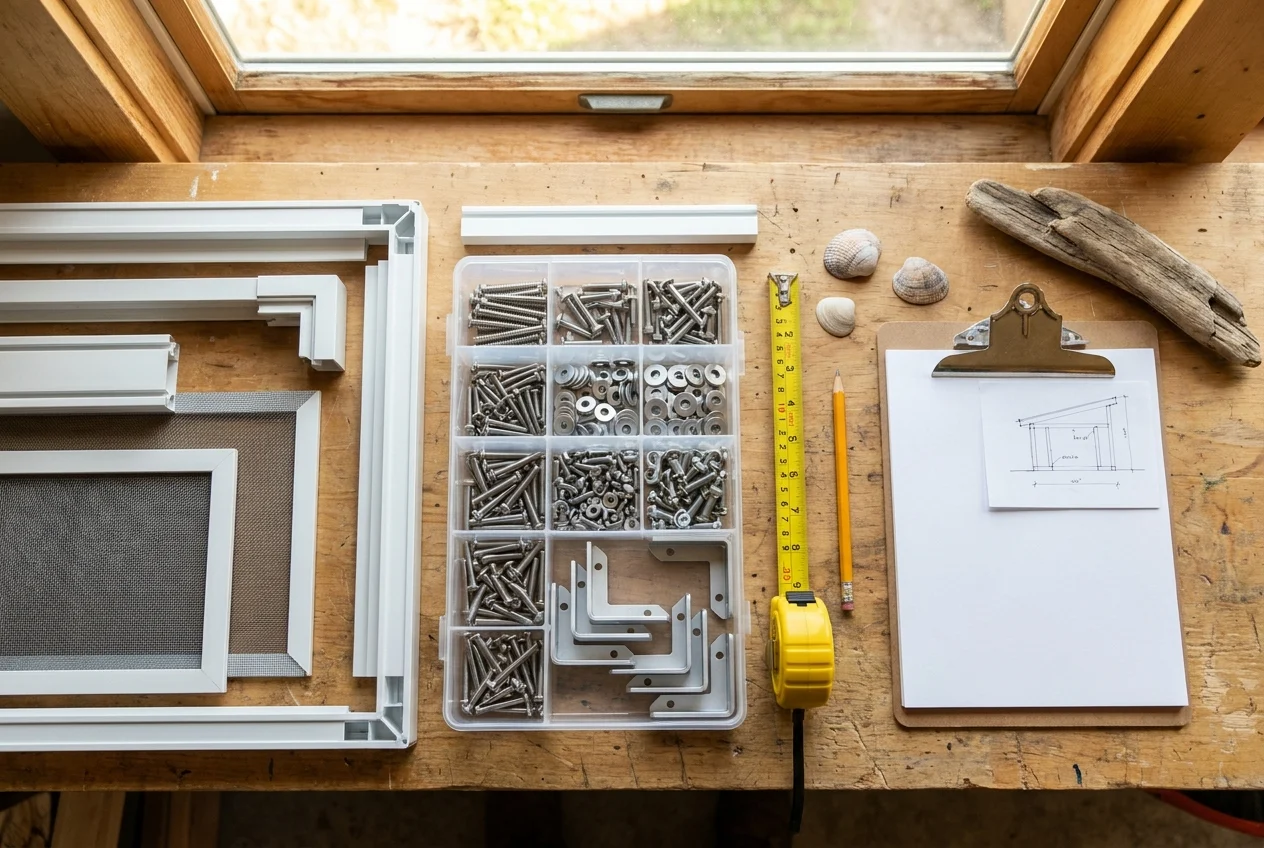
The frame is the backbone of the lanai enclosure. Powder-coated aluminum is widely used because it is strong, lightweight, and naturally resistant to rust. However, not all framing systems are equal.
Fasteners are especially important in coastal environments. Standard screws can deteriorate faster when exposed to salt air and moisture. Upgraded stainless steel or corrosion-resistant fasteners can extend the life of the enclosure and reduce staining, loosening, and maintenance problems.
Color and Finish Considerations
White, bronze, and black are common enclosure frame colors in Florida. White can feel bright and classic, especially on lighter homes. Bronze often blends well with rooflines, landscaping, and traditional Florida architecture.
The best color is not only a style decision. Darker frames can visually disappear into the view, while lighter frames may reflect more light. The home’s exterior colors, trim, roof, pavers, pool finish, and landscape design should all be considered so the finished enclosure feels integrated rather than added as an afterthought.
Designing for Daily Use, Privacy, and Lifestyle
A great lanai enclosure should support the way the household actually lives. A couple who enjoys morning coffee outside may need shade, insect protection, and a peaceful seating area.
Think carefully about traffic flow. Doors should be placed where people naturally walk, not where they interrupt furniture layouts or create awkward paths. If the enclosure connects to a pool, outdoor kitchen, garden path, or side yard, door swing direction and threshold placement can make daily use much smoother.
Furniture, Fans, and Lighting
Before finalizing the layout, consider where furniture, ceiling fans, and lighting will go. A lanai that looks spacious when empty can feel cramped if the enclosure does not account for dining chairs, chaise lounges, storage cabinets, or grill access.
Ceiling fans can make a lanai far more comfortable during warm months, especially when paired with good cross ventilation. Soft lighting can turn the space into an inviting evening retreat. These comfort features should be planned early so wiring, mounting surfaces, and clearances are
Need help with Choosing the Right Lanai Enclosure for Coastal Homes in Englewood and North Port?