
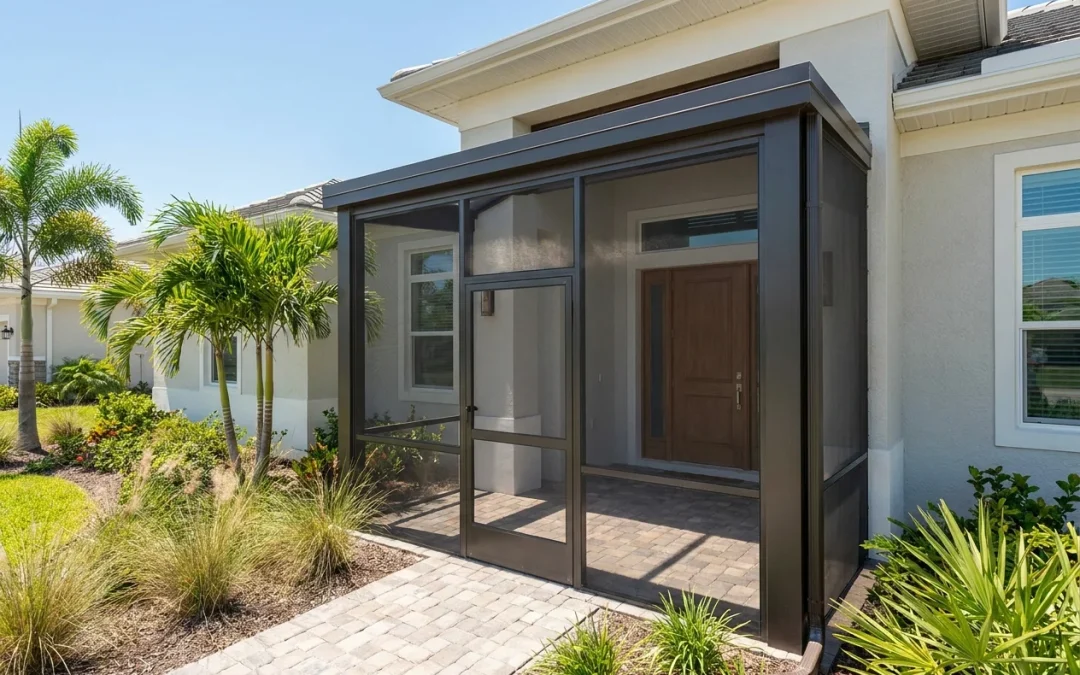
Your front door is one of the most exposed parts of your home. It faces daily sunlight, wind-driven rain, humidity, and the sudden impact of leaves, branches, and other debris during storms. Over time, those conditions can wear down even a well-built door, affecting its finish, hardware, weatherstripping, and overall performance.
A custom aluminum entryway enclosure adds a durable layer of protection at the front of the home while also improving comfort and curb appeal. Because it can be built to fit the exact dimensions and style of your entry area, it helps shield the door more effectively than a one-size-fits-all cover or temporary solution.
Why Front Doors Need Extra Protection from the Elements
Front doors are designed to be strong, but constant exposure to outdoor conditions can shorten their lifespan. Heat can cause fading, expansion, and surface deterioration, especially on painted or stained doors. Rain can collect around thresholds, seep into small gaps, and contribute to swelling, rot, rust, or mildew depending on the door material and surrounding trim.
Storm debris adds another layer of risk. During heavy winds, small branches, palm fronds, gravel, and loose outdoor items can strike the entry area. Even minor impacts can chip paint, dent surfaces, scratch glass inserts, or damage decorative hardware. Over time, repeated exposure creates visible wear and may lead to more expensive repairs.
The front entry is also a transitional space where indoor comfort meets outdoor weather. If the entry area is not protected, water can be tracked inside, hot air can radiate through the door, and wind can push moisture into places it should not go. A well-designed enclosure helps reduce these issues by creating a buffer zone between the open outdoors and the front door itself.
How Aluminum Entryway Enclosures Create a Durable Weather Barrier
Aluminum is a practical material for entryway protection because it is strong, lightweight, and naturally resistant to rust. Unlike wood, it does not warp, crack, or absorb moisture when exposed to rain and humidity. This makes it especially useful in climates where intense sun, sudden downpours, and seasonal storms are common concerns.
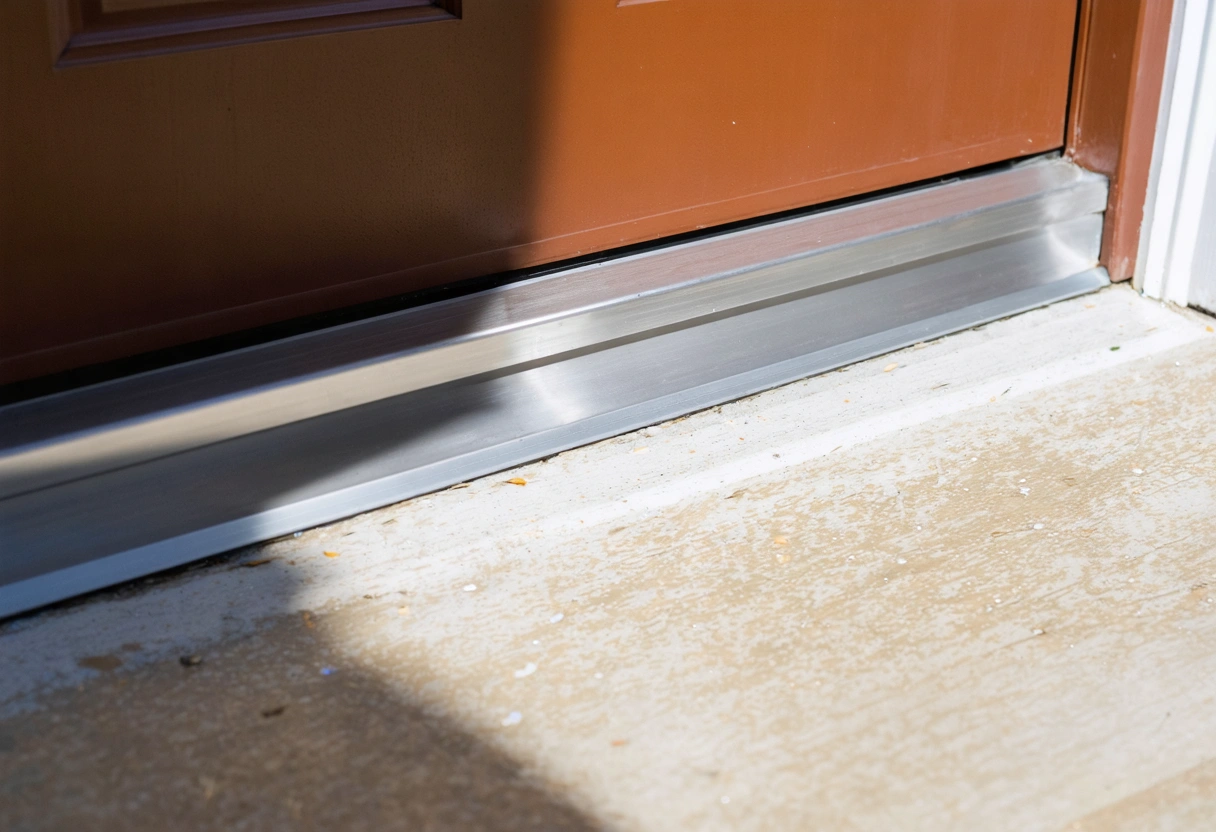
A custom aluminum entryway can be designed to cover the most vulnerable parts of the front entrance, including the door slab, frame, threshold, sidelights, and nearby trim. By reducing direct exposure to rain and sunlight, the enclosure helps slow down fading, peeling, water intrusion, and other forms of weather-related damage.
Protection from heat and direct sunlight
Heat buildup around a front entry can be tough on door materials and finishes. Prolonged sun exposure can fade paint, dry out wood, weaken adhesives, and make metal hardware hot to the touch. An aluminum entryway enclosure can help shade the door and reduce the amount of direct solar exposure it receives throughout the day.
This added shade may also improve comfort near the entry. When the front door is less exposed to direct sunlight, the surface temperature can be lower, and the area around the entrance can feel more comfortable for guests, deliveries, and everyday use. For homes with decorative glass or sidelights, reducing direct sun can also help limit glare and heat transfer.
Protection from rain, splashback, and wind-driven moisture
Rain does not always fall straight down. In windy conditions, moisture can be pushed against the door, into the frame, and along the threshold. Over time, this can stress weatherstripping, stain surrounding surfaces, and encourage mildew in shaded or poorly ventilated areas.

A properly fitted aluminum entryway enclosure helps redirect rain away from the front door and reduces the amount of water that reaches the immediate entry surface. It can also help limit splashback from nearby walkways or steps, keeping the area cleaner and reducing the risk of water pooling near the threshold.
Protection from storm debris and sudden impacts
During severe weather, the front door can become a target for airborne debris. Items such as twigs, small branches, loose mulch, stones, patio decor, and windblown yard waste can strike the door surface or surrounding trim. Even when the impact is not strong enough to break anything, it can leave scratches, chips, dents, or marks that make the entry look worn.
A custom aluminum entryway enclosure helps place a stronger exterior layer in front of the door area. Depending on the design, it may include aluminum framing, screening, panels, or other protective components that help reduce direct contact between storm debris and the door itself. This is especially valuable for doors with decorative glass, sidelights, transoms, specialty finishes, or ornate hardware that may be more expensive to repair or replace.
The enclosure can also help contain loose debris before it reaches the threshold. Leaves, seed pods, and small branches are less likely to pile directly against the door, which can make cleanup easier after a storm. By keeping debris farther away from the door sweep, hinges, lockset, and lower frame, the enclosure supports both appearance and long-term function.
Why Custom Fit Matters for Front Entry Protection
Not every front entrance has the same shape, size, or exposure. Some homes have a deep recessed entry, while others have a front door that sits nearly flush with the exterior wall. Some entry areas include steps, columns, arched openings, sidelights, double doors, or decorative trim that can make standard covers difficult to use effectively.

A custom aluminum entryway is built around the actual dimensions and layout of the home. This allows the enclosure to provide better coverage where protection is needed most. Instead of leaving vulnerable gaps around the sides, top, or threshold, a custom design can be adapted to the structure of the entry and the direction from which sun, rain, and wind most often affect the home.
Better coverage around unique entry layouts
Homes with wide front doors, double entry doors, or sidelights often need more than a basic overhead awning. Rain can still blow in from the sides, and sunlight can still strike glass or door panels at an angle. A custom enclosure can be planned to protect the full width of the entry, including trim and adjacent glass features.
For arched entryways or entrances with decorative columns, custom aluminum framing can be shaped and sized to complement the architecture rather than look like an afterthought. This helps preserve the character of the home while adding practical protection. The goal is not only to cover the front door, but to create a finished entry space that looks intentional.
Fewer gaps where water and debris can enter
Gaps are one of the biggest weaknesses in a poorly fitted entry cover. If the enclosure does not align well with the surrounding structure, wind-driven rain can still reach the door and collect along the threshold. Leaves and debris can also blow through open areas and settle against the frame.
With a custom entryway, measurements can account for wall angles, floor slope, roofline, step placement, and existing trim. This makes it easier to create a more complete barrier that helps control where water goes. Proper fit also improves the appearance of the finished project because the enclosure follows the home rather than fighting against it.
Added Benefits Beyond Weather Protection
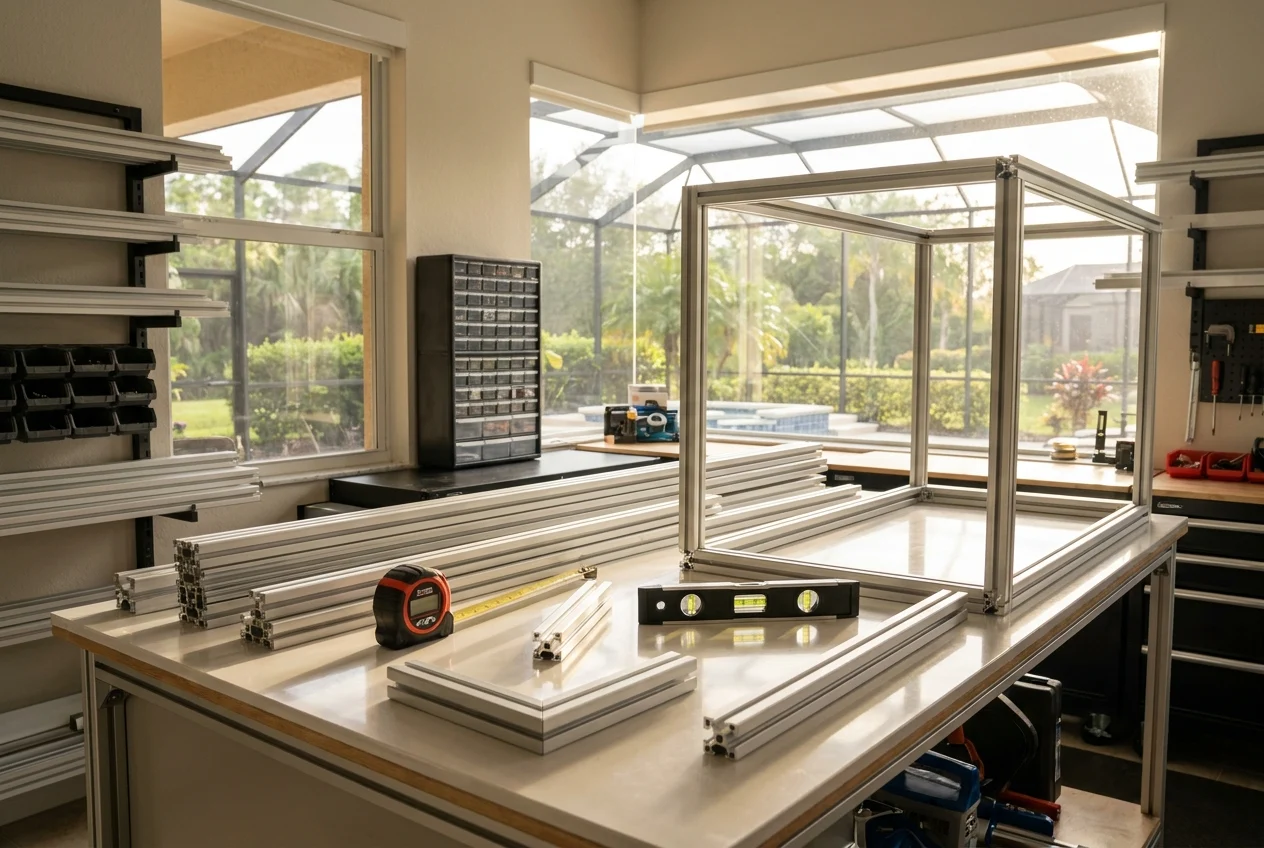
Although protection is often the main reason homeowners choose an aluminum entryway enclosure, the benefits usually extend beyond the front door itself. A well-designed enclosure can make the entry more comfortable, more usable, and easier to maintain throughout the year.
A cleaner and more comfortable entry area
When rain, leaves, and debris are kept farther from the door, the entry area tends to stay cleaner. This can reduce the amount of dirt, moisture, and organic material tracked into the home. It can also make the front step or landing more pleasant for guests, delivery drivers, and family members arriving during bad weather.
In hot climates, shade from an aluminum entryway can make the front entrance feel less harsh during the warmest parts of the day. Guests waiting at the door have a more comfortable place to stand, and homeowners may notice that the door handle, lock, and glass are less exposed to direct heat. This can make everyday use of the front entry more convenient.
Improved privacy without closing off the entrance
Depending on the style of the enclosure, a custom aluminum entryway can add a sense of privacy while still keeping the entrance bright and welcoming. Screened or partially enclosed designs can make it harder for passersby to see directly into the front doorway when the main door is open.
This can be especially useful for homes with glass inserts, sidelights, or front doors that open into a living room, foyer, or hallway. The enclosure can create a subtle visual buffer without making the front of the home feel closed in. Homeowners can choose designs that balance openness, airflow, visibility, and privacy.

Support for ventilation and airflow
Many front doors stay closed because opening them exposes the home to insects, debris, and outdoor conditions. With the right enclosure design, homeowners may be able to enjoy more airflow at the entry while keeping a protected barrier in place.
For example, an enclosed front entry with screening can allow fresh air to move through the entrance area while helping to keep leaves and pests outside. This can be beneficial during mild weather when homeowners want ventilation without fully exposing the doorway. It also helps the entry space dry more quickly after rain, which can reduce lingering dampness around the threshold.
How Aluminum Performs Compared with Other Entryway Materials
Front entry protection can be built from several materials, but aluminum offers a strong combination of durability, appearance, and low maintenance. Its performance characteristics make it a popular choice for exterior applications where moisture, heat, and changing weather are constant factors.
Aluminum versus wood
Wood can create a warm and traditional appearance, but it requires regular maintenance when exposed
to moisture, insects, and sun. Aluminum reduces upkeep, resists corrosion, and provides dependable front entry protection year after year.
Need help with How a Custom Aluminum Entryway Can Help Protect Your Front Door from Heat, Rain, and Storm Debris?